Dinosaur Footprints on the Gettysburg Battlefield:
Gettysburg is known for its Civil War history, but tucked into the stonework of a quiet bridge on South Confederate Avenue is something far older — authentic dinosaur footprints, preserved in the very rock used to build the structure. These tracks date back roughly 200 million years, long before soldiers marched across these fields.
Most visitors walk right past them without ever realizing what they’re seeing
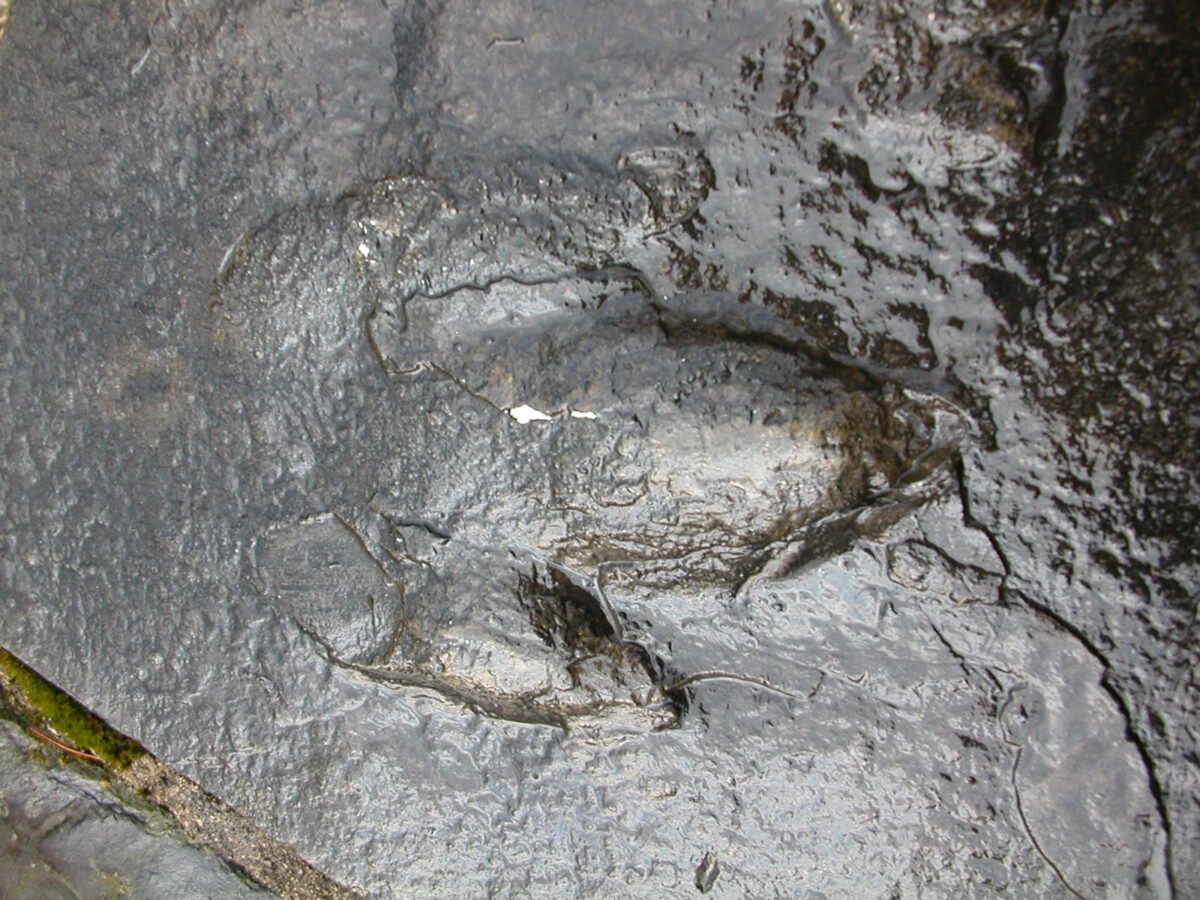
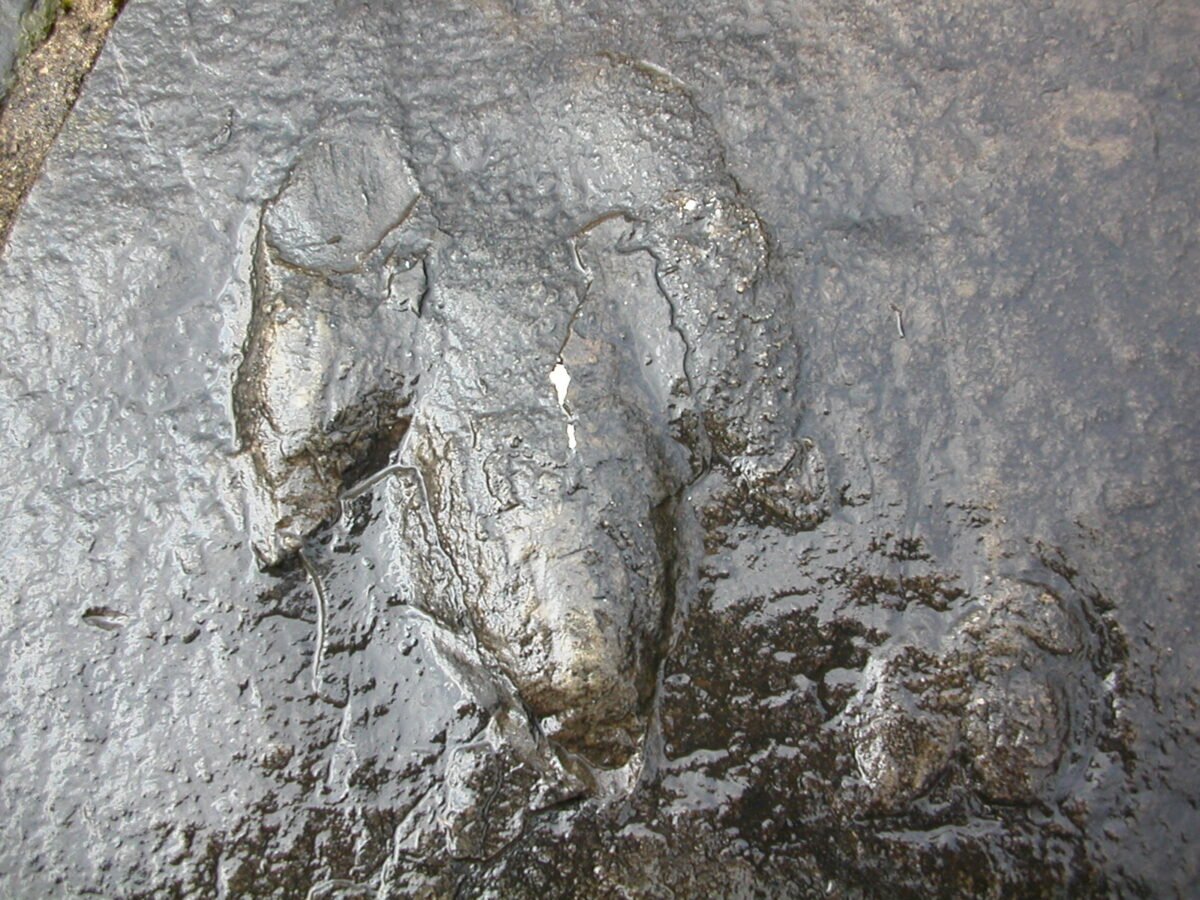
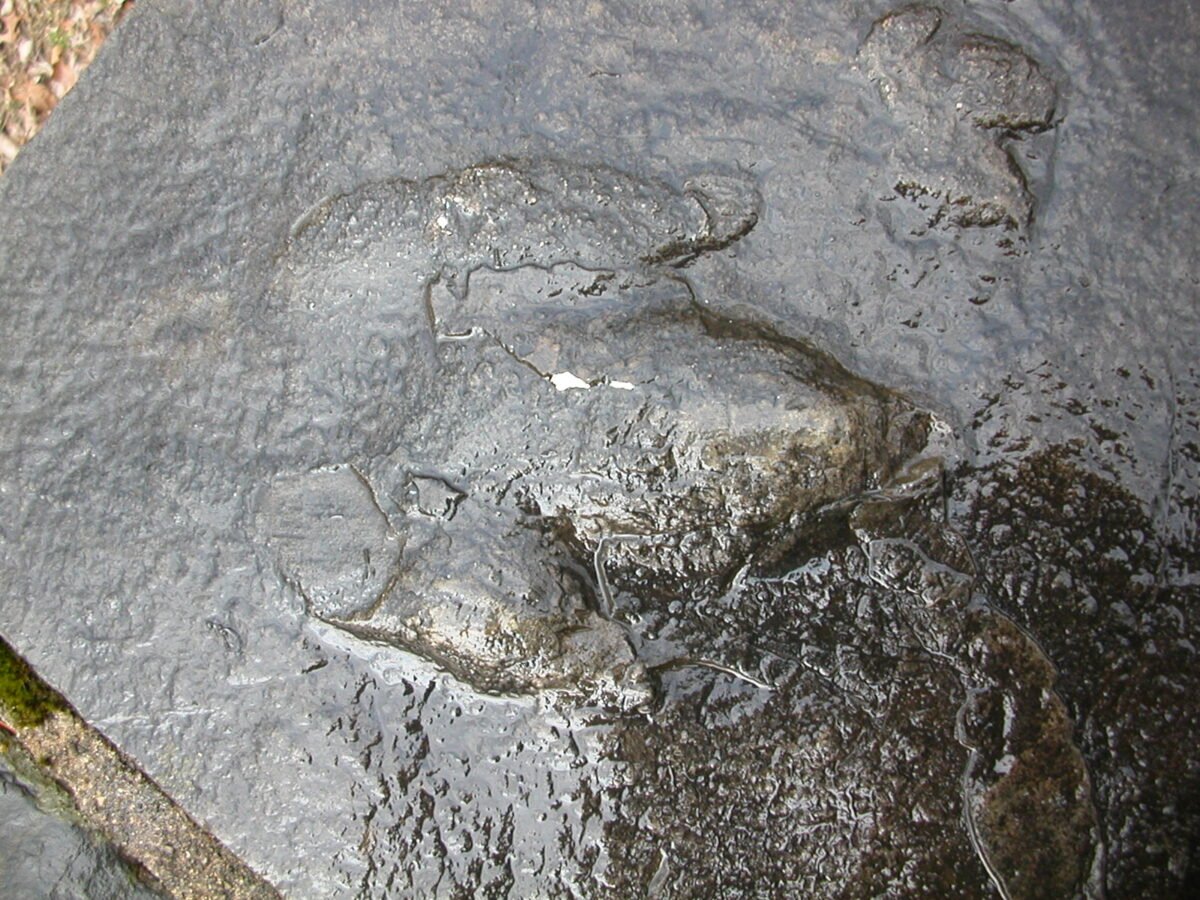
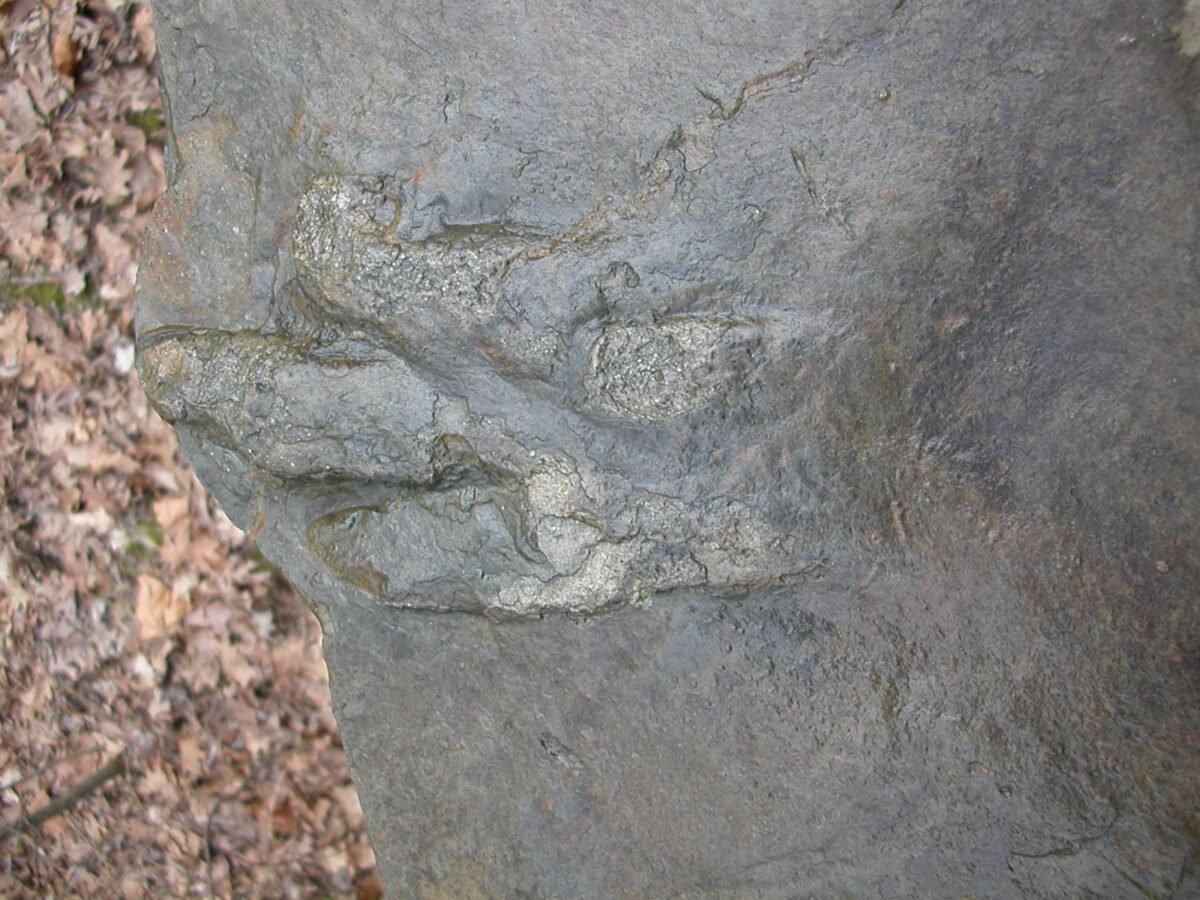
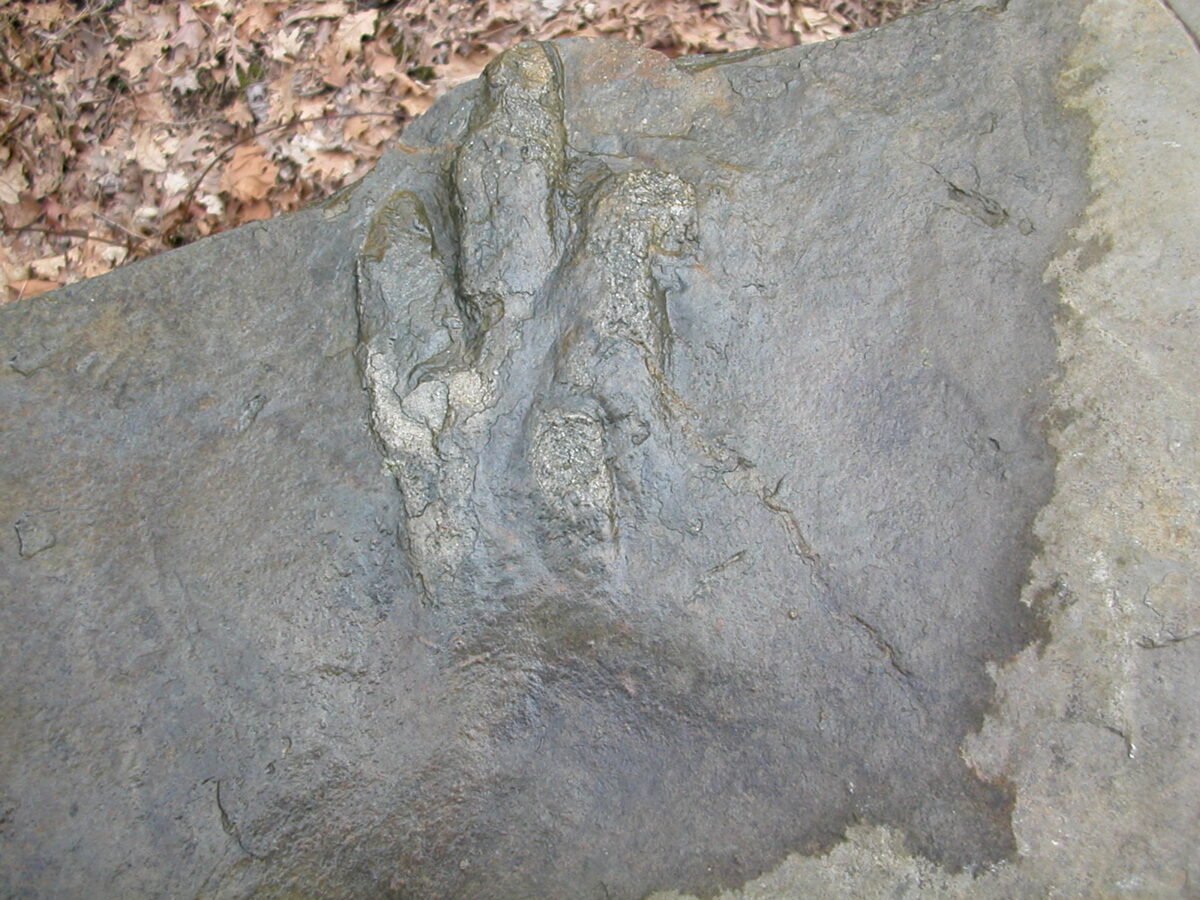
These tracks date back roughly 200 million years, long before soldiers marched across these fields. We had heard about these prints and researched where they were. On March 18, 2005, we stopped at the stone bridge over Plum Run and found all 3 print impressions on the bridge. The shapes are very distinct to be random erosion. We took casts and pictures of the prints. They show clear toe marks, a defined heel, and the unmistakable shape of a three‑toed dinosaur track.
The bridge itself was built around 1938 using sandstone and siltstone blocks quarried from the old Trostle Quarry in Adams County. Those stones happened to contain preserved dinosaur tracks — and instead of being removed or destroyed, they were simply incorporated into the bridge. Today, the prints remain visible to anyone who knows where to look.
Where the Tracks Are Located: The stone bridge that carries South Confederate Avenue over Plum Run. According to the Gettysburg Daily documentation, there are three dinosaur footprints on the bridge: (we found all 3):
One Anchisauripus sillimani print on the south side of the bridge: The Anchisauripus print is the most dramatic, sticking slightly over the edge of the stone block.
Two Atreipus milfordensis prints (a smaller plant‑eater) on the north side
The dinosaur tracks were simply incorporated into the masonry. They’ve been hiding in plain sight ever since.
They’re easy to miss — but once you spot them, they’re unmistakable.
What Is Atreipus milfordensis?
A small, plant‑eating dinosaur from the Early Jurassic
Walked on three toes, leaving narrow, delicate tracks
Often found in groups or trackways
Prints are smaller and shallower than Anchisauripus
Common in Triassic/Jurassic rock formations across the East Coast
What Is Anchisauripus sillimani?
Anchisauripus sillimani
A lion‑sized, two‑legged carnivorous dinosaur
Lived during the Early Jurassic period (~200 million years ago)
Walked on three‑toed feet, leaving distinctive triangular tracks
Belongs to the ichnogenus Anchisauripus, known from trackways across the East Coast
Likely a fast, agile predator similar to early theropods
These tracks are not fossil bones — they are trace fossils, meaning they record the movement of the animal rather than its body.
Finding them in a Civil War bridge is what makes Gettysburg’s prints so unique.
A Surreal Blend of History
Standing on a Civil War bridge while examining dinosaur tracks is a strange and wonderful experience. It’s a reminder that Gettysburg’s history didn’t begin in 1863 — the land itself holds stories written long before humans ever arrived.
The tracks are easy to miss if you’re not looking for them, but once you see them, they’re unforgettable. And for us, having taken pictures back in 2005, it’s a personal piece of Pennsylvania history we’re glad to finally share. It remains one of our favorite unexpected Pennsylvania finds.