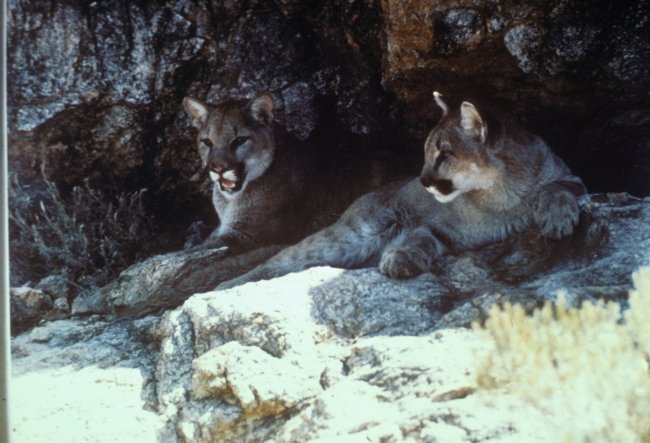
Mountain Lions in Pennsylvania: Sightings, Tracks, and the Truth Behind the Mystery:
For more than a century, Pennsylvanians have whispered about mountain lions slipping through the woods at dusk. A long tail disappearing into the brush. A scream echoing across a hollow. A paw print that looks just a little too big to be a bobcat.
If you’ve ever gone out looking for tracks — like we used to — you know the thrill of finding a print that makes you stop and stare. Could it be? Is it possible?
The answer is… complicated.
_____________________
Are Mountain Lions Officially in Pennsylvania?
According to the Pennsylvania Game Commission, no. According to thousands of Pennsylvanians who swear they’ve seen one? Maybe.
Here’s what we do know:
The Eastern cougar was declared extinct by the U.S. Fish & Wildlife Service in 2018.
The PGC maintains there is no breeding population of mountain lions in Pennsylvania.
But… young male cougars from the West have been documented traveling 1,000+ miles, and confirmed sightings have occurred in nearby states.
So while Pennsylvania doesn’t have an established population, the idea of a lone transient cougar passing through isn’t impossible.
_____________________
What “Eastern Cougar Extinction” Really Means:
When people hear that the Eastern cougar is extinct, they often assume it means there are no mountain lions anywhere in the eastern United States. But that’s not what the ruling means.
In 2018, the U.S. Fish & Wildlife Service declared the Eastern cougar subspecies (Puma concolor couguar) extinct across its entire historic range — not just in Pennsylvania, but throughout the entire eastern U.S. and southeastern Canada.
This extinction ruling applies specifically to the subspecies that once lived here naturally. It does not mean the species itself is gone from the East forever.
Cougars seen in the East today are typically:
Rocky Mountain cougars dispersing eastward
Midwestern males traveling long distances
Escaped or released captive cougars
Rare, verified individuals passing through states like Connecticut and New York
So while Pennsylvania does not have a breeding population of mountain lions, the idea of a transient western cougar moving through the state is absolutely possible.
In other words: The Eastern cougar is extinct, but the species is not — and individual mountain lions can still appear in the East.
Eastern Cougar vs. Western Cougar: What’s the Difference?
Eastern Cougar (Extinct Subspecies):
Scientific name: Puma concolor couguar
Historically lived in the eastern U.S. and southeastern Canada
Declared extinct in 2018
No confirmed individuals remain
Slightly smaller on average
Culturally tied to early Pennsylvania wilderness
Western Cougar (Still Thriving):
Scientific name: Puma concolor (western subspecies)
Populations strong in the Rockies, Black Hills, and Midwest
Young males frequently travel long distances
Confirmed dispersers into the Great Lakes and Northeast
These are the cats people might see in Pennsylvania today
_____________________
Why So Many People Think They See Mountain Lions:
Pennsylvania’s forests are full of animals that can look “big cat‑ish” at a distance:
Bobcats (the #1 misidentification)
Coyotes
Large house cats
Fishers
Golden retrievers in tall grass — yes, really
Add dusk lighting, distance, and adrenaline, and it’s easy to see how sightings happen.
Tracks: The Most Reliable Evidence:
Tracks don’t lie — and this is where your experience tracking prints becomes gold.
_____________________
Mountain Lion vs. Bobcat vs. Coyote Tracks (Comparison Chart):
Mountain Lion:
Size: 3–4 inches wide
Shape: Round, wide, powerful
Claws: No claw marks
Heel Pad: “M”‑shaped with three lobes
Overall Look: Big, soft, rounded edges
Bobcat:
Size: 1.5–2 inches
Shape: Round but much smaller
Claws: No claw marks
Heel Pad: Smaller, less pronounced
Overall Look: Compact, tidy, petite
Coyote:
Size: 2–2.5 inches
Shape: Oval, longer than wide
Claws: Claw marks present
Heel Pad: Narrow, dog‑like
Overall Look: More pointed and symmetrical
Confirmed Sightings in the Northeast:
While Pennsylvania has no verified modern cougar, nearby states have:
Connecticut (2011): A mountain lion struck by a car — DNA showed it traveled from South Dakota.
New York: Occasional verified tracks and trail‑cam photos.
Midwest: Young males regularly disperse long distances.
These cases prove one thing: a lone cougar can absolutely travel through Pennsylvania.
_____________________
Why We Want Mountain Lions to Be Here:
There’s something deeply human about wanting to believe a big cat still roams our forests:
It makes the woods feel wild again
It connects us to the past
It adds mystery to familiar places
It gives us stories to tell
And honestly? Even the possibility makes every hike a little more exciting.
_____________________
What to Do If You Think You Saw One:
Note the tail length (cougars have long, rope‑like tails)
Look for tracks
Look for scat (large, segmented, often with hair)
Write down the location, time, and distance
If you have a photo, zoom in on the tail, head shape, and leg length
Even if it turns out to be a bobcat or coyote, you still learned something about the woods — and that’s never wasted.
_________________________________
FAQ's:
Officially, no. The Pennsylvania Game Commission says there is no breeding population in the state. However, transient western cougars occasionally travel long distances and could pass through.
Yes. The Eastern cougar subspecies was declared extinct across the entire eastern United States in 2018. This does not mean the species is gone — only that the native subspecies no longer exists.
Most sightings turn out to be bobcats, coyotes, large house cats, or fishers. Rarely, a western cougar dispersing from the Midwest may appear in the Northeast.
Yes. The most famous case was a 2011 Connecticut cougar that DNA‑tested back to South Dakota. New York has also had occasional verified tracks and trail‑cam photos.
Look at the tail. Mountain lions have a long, rope‑like tail. Bobcats have a short, stubby tail.
They are 3–4 inches wide, round, show no claw marks, and have a heel pad with a distinct “M” shape and three lobes.
It’s possible. As western populations grow, young males continue to disperse eastward. A breeding population hasn’t re‑established — but nature has a way of surprising us.
Note the tail length, look for tracks or scat, take a photo if safe, and record the location and time. Even if it’s not a cougar, the information helps wildlife experts understand local sightings.